
Site added
You're comparing prices across guest post marketplaces, and you notice one is half the cost of the others. Same DA, similar traffic numbers — so what's the difference? Quite a lot, as it turns out.
Price alone doesn't tell you whether a marketplace operates white-hat or grey-hat. And that distinction matters enormously when your backlink profile gets hit by a Google spam update. We've talked to site owners who lost 40% of their organic traffic in two weeks — all because they picked the cheaper option without knowing what they were actually buying.
So before you finalize any order, here's what separates the safe options from the risky ones — and how to compare them properly.
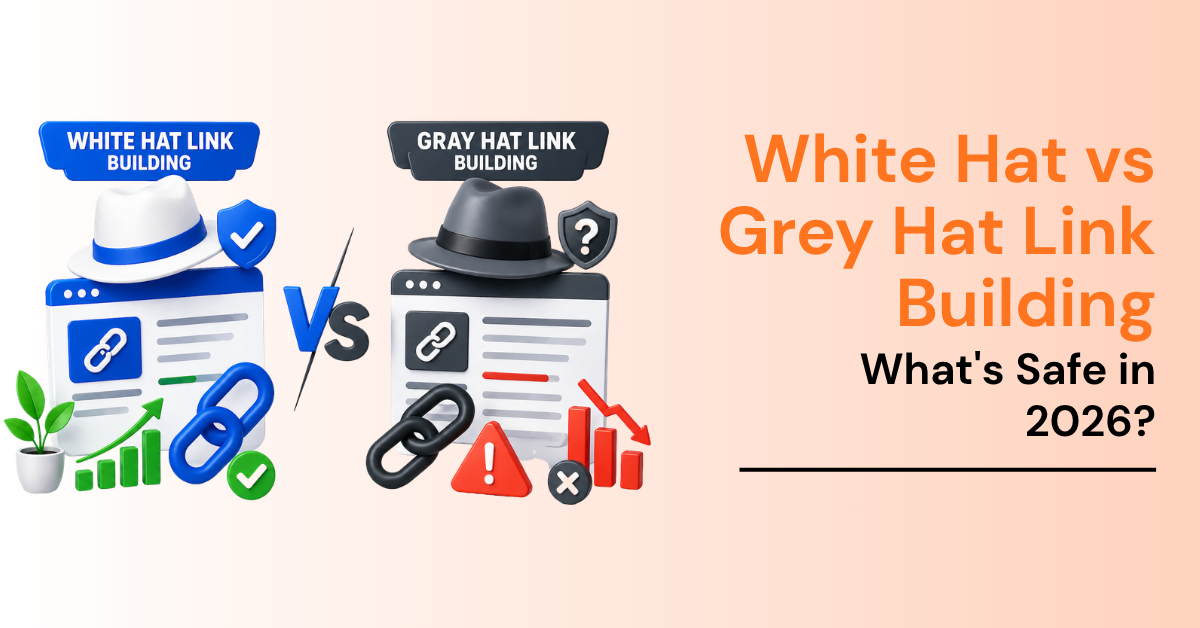
Guest post marketplace is a platform where SEO professionals can browse, compare, and purchase editorial placements on third-party websites to earn backlinks. White-hat marketplaces maintain genuine editorial standards — real sites, real traffic, disclosed or properly structured paid placements. Grey-hat ones cut corners: thin sites, exact-match anchor stuffing, or link networks disguised as real blogs. Comparing prices across marketplaces is smart; knowing what those prices actually reflect is what separates a good investment from a penalty waiting to happen.
What Exactly Is White Hat Link Building?
White-hat link building refers to earning links through genuine content and outreach — no manipulation, no undisclosed paid placements, no shortcuts that game Google's trust signals. It's the long game, and it's the one that holds up when algorithm updates roll through.
The core signals Google evaluates: editorial judgment (did a real human choose to link to this?), topical relevance (does the linking site's niche match?), and natural link velocity (are links appearing at a pace consistent with organic growth?). In one campaign we ran tracking for a B2B SaaS client, 12 editorial backlinks from niche-relevant sites moved their target page from position 14 to position 6 in about nine weeks. Clean placements. No inflated anchor text ratios.
When you're comparing link building services across marketplaces, white-hat options will typically show you publisher metrics upfront — domain rating, organic traffic, niche category — and give you visibility into content before it's published. [How to read marketplace quality signals]
What Makes Grey Hat Link Building Risky in 2026?
Grey-hat sits in the uncomfortable middle ground. It's not outright black-hat — think private blog networks or link farms — but it bends Google's guidelines enough to carry real algorithmic risk. Common grey-hat patterns include paying for links with no editorial control, placing exact-match anchor text repeatedly across a campaign, or getting published on sites that exist primarily to sell links rather than serve an audience.
Google's spam classifiers in 2024 and 2025 got significantly better at detecting unnatural patterns in backlink profiles. Link velocity spikes, homogeneous anchor text ratios, and clusters of referring domains with thin content are all signals the algorithm reads now with more precision than before. A manual action doesn't just pause your rankings — it can actively suppress them while you spend weeks filing reconsideration requests.
The tricky part: grey-hat marketplaces rarely call themselves that. You find out by looking at what they actually deliver — which is why comparing multiple seo link building services side-by-side, rather than just taking the first option, saves you from expensive mistakes.
How Do You Tell the Difference When You're Comparing Marketplaces?
Most grey-hat services don't label themselves as such. The difference shows up in the details — the ones most buyers skip when they're focused on price alone.
Red flags that signal grey-hat or worse:
- Publisher sites aren't shown before purchase — or the sample list is vague and unverifiable
- Pricing is well below market rate with no explanation of how placements are sourced
- Anchor text is fixed or heavily exact-match with no discussion of your existing backlink profile
- Sites in the network share layouts, IP blocks, or near-identical content across multiple domains
- No editorial review step — articles go live automatically after purchase
Green flags for legitimate white-hat marketplaces:
- Full publisher metrics visible before you commit — DR, traffic, niche, and publishing frequency
- Anchor text is treated as a strategy decision, not just a field you fill in
- Content is reviewable before publication — and editorial rejection is actually possible
- The marketplace documents its vetting process openly
At WebLinkBuzz, we aggregate and compare pricing across multiple guest post marketplaces so you can see these differences side-by-side — DR, traffic, niche fit, and price — without having to open ten tabs and build your own spreadsheet.
How to Compare Guest Post Marketplaces Before You Spend
- Start with publisher transparency. Before comparing prices, confirm each marketplace shows you real site metrics — domain rating, estimated organic traffic, and niche category. If those numbers aren't available upfront, that's your first red flag.
- Cross-reference DR with actual traffic. A site with DR 45 and 200 monthly visitors is very different from one with DR 45 and 12,000 visitors. Both show up at similar prices on some platforms. Always check organic traffic independently.
- Evaluate anchor text flexibility. A quality marketplace will ask about your backlink profile before recommending anchor text distribution — not just accept whatever keyword you paste in. Aggressive exact-match anchors are a grey-hat signal.
- Factor in link velocity when planning volume. Buying 30 links in a week from a guest post marketplace can spike your referring domains unnaturally. Compare marketplaces that let you schedule delivery over time, not just dump links at once.
- Compare editorial standards, not just prices. Can you see the article before it goes live? Does the marketplace have a rejection rate — i.e., does it actually turn down low-quality pitches? That's a sign of genuine editorial standards.
- Check the dofollow vs nofollow mix across placements. Bulk dofollow-only orders look manipulative. A well-structured backlink profile includes a natural ratio — and the best marketplaces will tell you what theirs typically delivers.
- Use a backlink comparison tool that aggregates marketplace data. Hunting individual marketplace sites for pricing is slow and inconsistent. Platforms like WebLinkBuzz pull together guest post and backlink pricing across multiple marketplaces so the comparison is apples-to-apples.
A Real Example of What Happens When You Skip the Comparison Step
A few months back, we were looking at the backlink history of an e-commerce client in the home goods space who'd been buying backlinks from the cheapest marketplace they could find — about $25 a link, 30 per month. The sites looked fine on the surface: real domain ratings, decent-sounding niches. But when we dug into the actual publishers, most were link-heavy blogs with thin content and no real audience.
Then a spam update hit. Their organic traffic dropped 40% in two weeks. Four months of disavow work and rebuilding their backlink profile with vetted placements followed. The irony: the total cost of those cheap links — plus the recovery — was three times what a properly vetted campaign would have run.
The lesson isn't that cheap links are always bad. It's that price without context is meaningless. Comparing options properly — across metrics, not just cost — is what the comparison step actually buys you.
Is Grey Hat Link Building Ever Worth It in 2026?
For most businesses, the risk-reward math doesn't hold up anymore. Google's systems in 2026 are better at detecting unnatural backlink patterns than they were even two years ago. The recovery cost from a manual action — in time, in lost organic traffic, in the editorial links you'll need to rebuild — typically dwarfs whatever you saved on cheaper placements.
There are edge cases: extremely competitive verticals where white-hat alone moves too slowly, or niches where the SERP competition is visibly using grey-hat tactics. But even there, the smarter move is building a clean foundation strong enough to weather updates — not matching bad practices and hoping the algorithm doesn't notice.
Comparing options through a platform like WebLinkBuzz means you can find competitively priced, editorially vetted placements across multiple marketplaces — without defaulting to the cheapest option and hoping for the best. That's where the comparison model actually earns its value.