
Site added
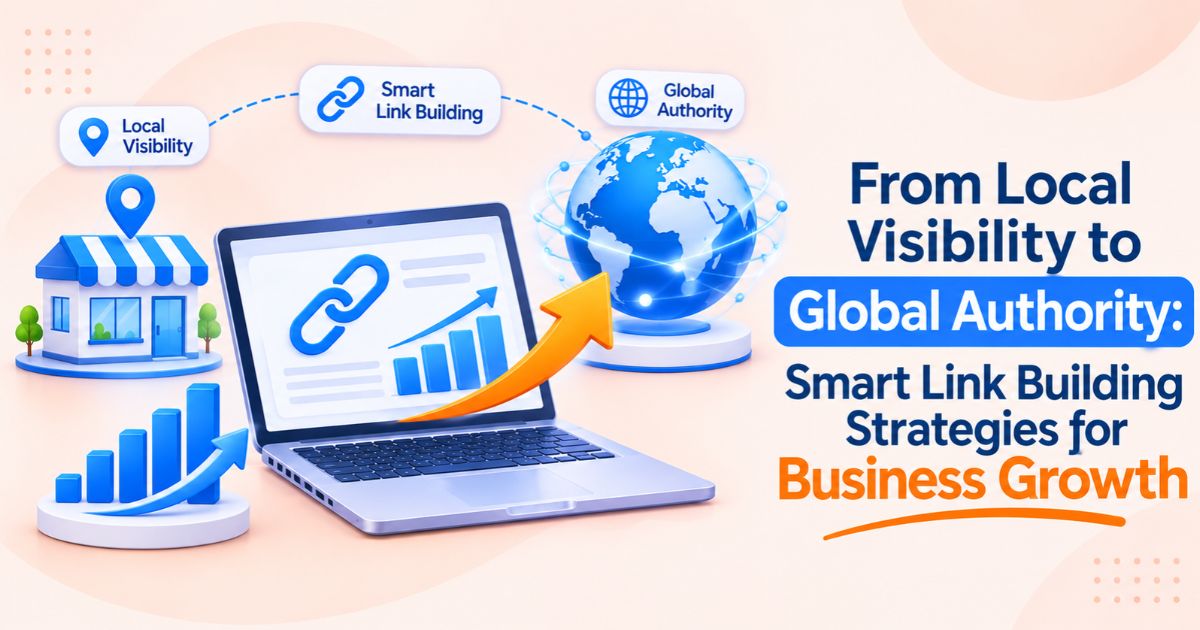
Most businesses start link building the wrong way round. They chase a few big names, or they buy whatever is cheapest, and then wonder why rankings barely move. The better path is a sequence: earn trust close to home, make every link contextual, scale with a vetted supply source, and only then expand across borders.
This guide lays out that sequence. You will see how link building strategies change at each stage, what to do in each one, and how to avoid the mistakes that cost businesses months. WeblinkBuzz put this guide together as a practical framework you can apply at whatever stage your link profile is in.
What Are Link Building Strategies?
Quick answer: Link building strategies are the planned methods a business uses to earn links from other relevant websites to its own pages. The strongest approaches combine local relevance, links placed inside useful content, vetted publishing sources, and careful expansion into new markets.
A strategy is different from a tactic. Guest posting, a local sponsorship or a data study is a tactic. A strategy decides which tactics you use, in what order, for which pages, and how you measure them. Without that decision layer, link building turns into a pile of unrelated placements.
Why Link Building Still Matters for Business Growth
Links remain one of the main ways search engines discover pages and judge which sources other sites trust. For a business, that means a good link does two jobs. It supports rankings, and it sends visitors who already have context about you.
There is also a visibility angle beyond classic results. Pages that are cited and referenced across relevant sites are easier for search systems, including AI generated summaries, to recognise as credible sources on a topic. Links are not the only signal, but they are one you can influence directly.
The Four Stage Framework at a Glance
|
Stage |
Goal |
Core tactic |
Best for |
|
1. Local |
Build trust and relevance in your home market |
Community, partner and local media links |
New or service area businesses |
|
2. Contextual |
Make every link meaningful |
Links inside relevant body content |
Every business, at every stage |
|
3. Marketplace |
Scale placements with quality control |
Vetted guest post and link insertion sourcing |
Teams that need volume and speed |
|
4. International |
Win new regions and languages |
Regional publishers and localised content |
Businesses ready to expand |
Stage 1: Local Link Building That Builds Real Trust
Quick answer: Local link building is the practice of earning backlinks from websites tied to your city, region or local community, such as local news sites, business associations, suppliers and event organisers. These links show relevance to a specific area.
Local links are usually the easiest to earn and the hardest to fake, which is why they are a strong foundation. A link from a regional newspaper or a respected trade association tells search engines that real people in your area recognise your business.
Local link building tactics that work
• Partner and supplier pages. Ask the businesses you already work with to mention you on a relevant page, ideally with a short description of what you do together.
• Local sponsorships and events. Sponsoring a community event, school programme or sports team often earns a link from the organiser's website.
• Local press and community media. Offer a genuine story: an opening, a hire, a community project or a useful local data point.
• Business associations and chambers. Membership pages and member directories are credible when they are curated by real organisations.
• Local resource content. A neighbourhood guide, a regulation explainer or a seasonal checklist gives local sites a reason to link to you.
• Vetted local citations. Keep your business name, address and phone details consistent across respected directories. Skip mass submission directories that exist only to sell links.
Practical tip: Before you chase a local link, ask one question: would a real customer in my area plausibly find this page useful? If the answer is no, the link is unlikely to be worth much.
Stage 2: Contextual Link Building Makes Every Link Count
Quick answer: Contextual link building is the practice of placing links inside the main body of relevant content, where the surrounding text explains why the link is useful. Contextual links carry more meaning than links in footers, sidebars or author profiles.
Context is the difference between a link that exists and a link that helps. When the sentences around a link describe the destination page, readers understand why they should click and search engines get a clearer topical signal.
How to earn contextual links
1. Create something worth citing. Original data, clear definitions, checklists and templates are the kinds of assets other writers reference mid paragraph.
2. Use guest posts with a purpose. Write a useful article for a relevant publication and place the link where it supports a point, not in a forced bio line.
3. Pursue link insertions. Ask to add a relevant reference to an existing article that already covers the topic well. Link insertion is the usual route for this.
4. Reclaim unlinked mentions. If a site already mentions your brand without a link, a polite request often turns it into a contextual link.
5. Fix broken references. Where a relevant page links to a dead resource, offer your matching page as a replacement.
Anchor text distribution guidance
Anchor text should read naturally inside the sentence. A healthy profile is mixed, with most anchors branded, naked URLs, or descriptive phrases, and only a small share built around exact match keywords. A profile that repeats one commercial phrase again and again looks engineered.
|
Anchor type |
Example |
How to use it |
|
Branded |
YourBrand |
Should make up much of a natural profile |
|
Naked URL |
www.example.com/guide |
Common and low risk |
|
Descriptive or partial match |
a guide to local link building |
Best fit for contextual placements |
|
Generic |
Read more, this article |
Use occasionally for variety |
|
Exact match |
link building strategies |
Keep rare and only where it reads naturally |
Stage 3: Scale With a Guest Post Marketplace
Quick answer: A guest post marketplace is an online platform where publishers list their websites for sponsored or guest content placements and buyers browse, compare, and order them. It saves the time of finding sites and negotiating one by one.
Manual outreach works, but it is slow. A well-run guest post marketplace shortens the path by showing site metrics, categories, pricing, and turnaround in one place. That makes it easier to match placements to a plan, particularly when you need steady volume across several pages or clients. Because the same site can be listed by different sellers at different prices, compare before you order. A guest post price calculator is a quick way to sanity-check a quote against what other marketplaces charge.
How to vet a site before you buy
A marketplace gives you choice, not a guarantee. The vetting stays with you. Use this checklist on every candidate site:
|
Check |
What to look for |
|
Authority paired with traffic |
Review DR or DA alongside real organic traffic. Authority scores alone can be inflated, so treat traffic as an equal signal and be cautious when a high score sits next to little or no visitors. |
|
Topical relevance |
The site should publish content close to your niche, and the article should make sense on that site even without your link. |
|
Spam and penalty history |
Check for signs of past trouble: sudden traffic collapses, unrelated topics, thin pages, or heavy outbound linking to unrelated commercial sites. |
|
Editorial standards |
Look for real authors, clear formatting and content a reader would actually finish. |
|
Audience match |
Country, language and category should fit the market you want to reach. |
|
Link attribute |
Confirm in writing how the link will be tagged. Paid placements should carry rel="sponsored" (or rel="nofollow"), as Google asks. |
|
Transparent terms |
Pricing, turnaround, link type and number of links should be stated before you order. |
Stay compliant: Google asks that links placed in exchange for payment, including commercial guest posts, are marked with rel="sponsored" or rel="nofollow". Untagged paid links meant to pass ranking credit can breach its spam policies and put a site at risk of a manual action. A tagged link may pass less ranking value, but it still delivers referral traffic, brand exposure and discovery, so plan for those outcomes rather than for ranking credit alone.
Keep it safe: Pace your placements, vary your anchors, and spread links across several pages. A steady, mixed profile looks natural. A sudden burst of identical anchors does not.
Stage 4: International Link Building for Global Authority
Quick answer: International link building is the practice of earning backlinks from websites in other countries or languages to build visibility in those markets. It adds language, culture, and regional trust to the usual relevance and authority checks.
Once your local foundation is solid, new markets are the next growth lever. The mistake to avoid is treating a new country as a copy of the home market. Search habits, preferred publications, and even the way people phrase a query can differ.
|
Factor |
Local link building |
International link building |
|
Scope |
One city, region or country |
Several countries and languages |
|
Link sources |
Local media, associations, partners |
Regional publishers, directories and industry sites |
|
Language |
Usually one |
Native or localised content per market |
|
Complexity |
Lower |
Higher, with more research and coordination |
|
Main risk |
Low-value directory links |
Mismatched language, region or culture |
A practical international link building process
1. Choose markets with intent. Start with one or two regions where you already have customers, partners, or demand.
2. Prepare the destination pages. Use localised content, not just translation, and set up language and region targeting correctly, for example with hreflang annotations.
3. Find regional publishers. Study which sites your competitors in that market earn links from, and prioritise publications that readers there actually use.
4. Match the language of the link. A placement in the local language on a regional site usually reads as more natural than an English article dropped into an unrelated market.
5. Measure by market. Track referral traffic, rankings and enquiries for each country separately so you can see what works.
Outreach reality check: International outreach is more than translation. Regional publishers expect local language, local etiquette, and a pitch that fits their audience, and translated template emails tend to perform poorly. Work with native speakers, freelance outreach specialists, or a digital PR agency in the target market, and have them review both the pitch and the article before anything goes out.
A Phased Link Building Roadmap
|
Phase |
Focus |
Output |
|
Phase 1 |
Audit and foundation |
Backlink audit, target page list, competitor gap review, linkable assets planned |
|
Phase 2 |
Local trust |
Partner, sponsor, community and local media links secured |
|
Phase 3 |
Contextual scale |
Guest posts and link insertions placed through vetted sources, with varied anchors |
|
Phase 4 |
Market expansion |
Regional publisher outreach and localised pages for chosen countries |
|
Ongoing |
Review and clean up |
Monitor link status, anchor mix, referral traffic and ranking movement |
Common Link Building Mistakes to Avoid
• Chasing authority scores alone. A high DR site with no real audience is a weak placement.
• Over-optimised anchors. Repeating the same commercial phrase creates an unnatural pattern.
• Ignoring relevance. A link from an unrelated site rarely helps, however strong the site looks.
• Skipping vetting. Buying from a marketplace without checking spam signals shifts the risk onto you.
• Expanding too early. International campaigns built on a weak local foundation spread effort thin.
• Never reviewing. Links get removed, and pages change. Check your profile on a regular schedule.
How to Measure Link Building Success
Count outcomes, not just links. Useful measures include referral traffic from linking pages, ranking movement for the pages you targeted, growth in branded searches, and enquiries or sales that start from a linked visit. Review these by stage so you can see whether local, contextual, marketplace, or international work is paying off.
Conclusion: Build Authority in the Right Order
Link building strategies work best as a sequence. Earn trust locally, make every link contextual, use a vetted marketplace to scale, and expand internationally when the foundation is ready. Each stage supports the next, and each one rewards relevance over volume.
When you are ready to budget your placements, run the domains on your shortlist through the free WeblinkBuzz backlink price checker to benchmark what each marketplace charges before you commit, and use the competitor analysis tool to see where competitors already earn links. For help splitting spend by site type, see how to spend on link building by site context.