
Site added
AI search has changed where people find answers. Google's AI Overviews, ChatGPT search and Perplexity now summarise the web and cite a handful of sources. If your site cannot be crawled, rendered and understood, it will not be one of them, however good your content is.
That is where technical SEO comes in. It is the foundation that lets both classic search engines and AI systems reach, read, and trust your pages. Add authority signals on top, through contextual link building, and you give those systems a reason to cite you.
This guide covers what technical SEO means for AI search, what to fix first, and how backlinks fit in.
What Is Technical SEO in the Age of AI Search?
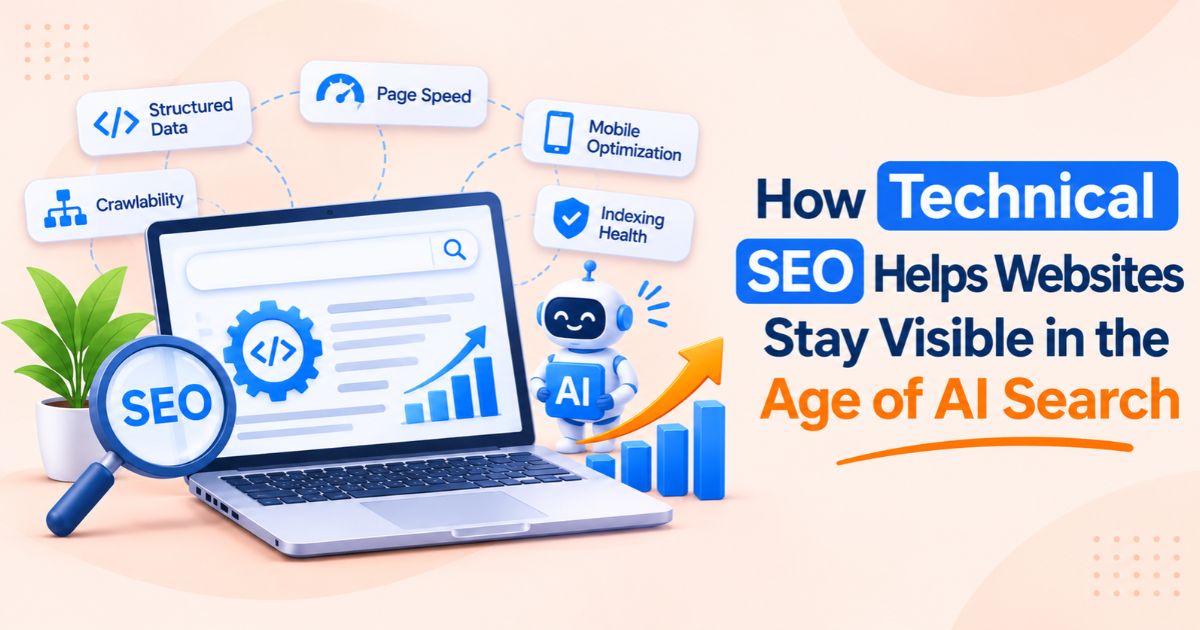
Technical SEO is the practice of making a website easy for search engines and AI systems to crawl, render, index, and understand. In AI search, it decides whether your content can be retrieved and cited at all.
AI answer engines work in two broad steps. They retrieve pages from an index or live crawl, then generate an answer from what they retrieved. Technical SEO affects the first step. If a page is blocked, slow, broken, or hidden behind scripts, it never reaches the second.
Google states that AI features in Search use the same foundational SEO best practices as regular Search. There is no separate technical switch for AI Overviews. A page needs to be indexed and eligible to show a snippet.
Search Intent: What Readers Want From This Topic
People searching this topic want to know three things: whether technical SEO still matters for AI search, what to fix, and in what order. This article answers them in that sequence, with a checklist at the end of the technical section.
Why Technical SEO Matters More With AI Search
• Fewer slots. AI answers cite a small set of sources, so the cost of being invisible is higher than a ranking drop from position 3 to 6.
• Retrieval depends on access. Blocked, slow, or unrendered pages are skipped.
• Clarity beats cleverness. Clean structure and consistent signals make it easier for a system to extract an accurate answer from your page.
• Errors compound. Duplicate URLs, conflicting canonicals, and broken redirects confuse which version of a page should be cited.
The Technical SEO Foundations AI Systems Rely On
1. Crawlability and robots controls
Check that your robots.txt does not block important sections. Know which crawlers you are allowing or blocking. Common ones include Googlebot, Bingbot, OAI-SearchBot and GPTBot (OpenAI), and PerplexityBot. Blocking a training crawler and allowing a search crawler are separate decisions, so review each user agent deliberately instead of applying one blanket rule.
Note that Google-Extended controls whether your content is used for Gemini model training and grounding. It does not affect whether you appear in Google Search.
2. Indexability
• Use noindex only where you mean it.
• Set one self-referencing canonical per page.
• Keep XML sitemaps clean: only indexable, 200-status URLs.
• Fix soft 404s and redirect chains.
3. Rendering and JavaScript
Googlebot can render JavaScript, but many other crawlers do not, or do so inconsistently. If your key content loads only after client-side scripts run, some AI systems may see an empty page. Server-side rendering or static generation for your main content is the safest route.
4. Site speed and Core Web Vitals
Fast, stable pages are easier to crawl at scale and better for users. Focus on Largest Contentful Paint, Interaction to Next Paint, and Cumulative Layout Shift. Compress images, defer non-critical scripts, and use a CDN.
5. Structured data (JSON-LD): the machine-readable bridge
Schema markup helps machines identify what a page is about: an article, organisation, product, FAQ or author. Use JSON-LD, mark up only what is visible on the page, and validate it. Structured data does not guarantee citations, but it removes ambiguity.
JSON-LD is the clearest way to tell machines what a page and its publisher are, without relying on them to infer it from layout. Start with these types:
|
Schema type |
Use it for |
Why it helps |
|
Article / BlogPosting |
Posts and guides: headline, dates, author, publisher |
Supports authorship and freshness signals |
|
Organization |
Your brand: name, logo, sameAs profiles |
Ties mentions across the web to one entity |
|
Person |
Authors, linked from Article |
Backs E-E-A-T with a named expert |
|
BreadcrumbList |
Site hierarchy |
Clarifies architecture and topic relationships |
|
FAQPage |
Pages with visible questions and answers |
Describes Q&A content clearly, though Google now shows FAQ rich results only for a few authoritative sites |
|
HowTo |
Step-by-step guides with visible steps |
Google retired HowTo rich results, so use it only as a content description |
No search or AI provider has published a list of schema types that AI answers favour. Treat markup as a clarity aid, not a citation lever, and keep it consistent with what readers can see.
6. Site architecture and internal linking
A logical hierarchy with descriptive internal links helps crawlers discover pages and understand topical relationships. Keep important pages within a few clicks of the homepage and use clear anchor text.
7. HTTPS, mobile-friendliness and clean URLs
These are baseline trust and usability signals. Serve everything over HTTPS, use responsive design, and keep URLs short and descriptive.
Technical SEO Checklist for AI Search Visibility
|
Area |
What to check |
Priority |
|
Crawl access |
robots.txt allows key pages and chosen AI crawlers |
High |
|
Indexing |
Correct canonicals, no stray noindex, clean sitemap |
High |
|
Rendering |
Core content present in the initial HTML |
High |
|
Speed |
Core Web Vitals in the "good" range |
Medium |
|
Structured data |
Valid JSON-LD matching visible content |
High |
|
Internal links |
No orphan pages, descriptive anchors |
Medium |
|
Content structure |
Clear H1-H3, short paragraphs, direct answers |
Medium |
|
Security |
Full HTTPS, no mixed content |
Baseline |
Make Your Content Easy for AI to Extract
Technical access gets you retrieved. Content structure gets you quoted.
• Answer the main question in the first one or two sentences under a heading.
• Use question-style subheadings where they match how people search.
• Use tables and lists for comparisons and steps.
• Name entities clearly: your brand, authors, products and locations.
• Show who wrote the content and why they are qualified. Experience and expertise signals support trust.
Audit Your Backlink Profile as Part of Technical SEO
Backlinks are an off-page signal, but a technical audit is the right time to check them. Use an SEO backlink checker to look for:
• Sudden drops in referring domains
• Links pointing to URLs that now return 404 or redirect
• Spammy or irrelevant links that need review
• Over-optimised anchor text
• Your strongest linked pages, which should pass authority on to key content through internal links
Reclaiming broken links and redirecting dead URLs to relevant live pages is one of the quickest technical wins available.
Where links land matters as much as how many you have. External links point to specific URLs, and your internal links decide how that link equity reaches the rest of the site. A strong link to an orphan page, or to a URL buried five clicks deep, passes little value on. Link from your best-linked pages to the pages you want cited, keep important pages within a few clicks of the homepage, and make sure every linked URL returns a 200 status and is indexable.
Why Contextual Link Building Supports AI Visibility
Once your site is technically sound, authority becomes the differentiator. Search engines have long used links as a signal of trust, and AI search systems that retrieve from search indexes inherit much of that signal. Pages from sites that are well linked and well referenced tend to be easier to surface than pages with no external validation.
Contextual link building means earning links placed inside relevant, editorially written content, rather than in footers, sidebars or directories. Context matters because the surrounding text tells search systems what the link and the linked page are about.
What good contextual links look like:
• Placed within a relevant article, not a thin or off-topic page
• Surrounded by useful, readable content
• On sites with real audiences and genuine editorial standards
• Using natural anchor text that fits the sentence
• Part of a varied profile, not a single repeated pattern
Quality and relevance matter far more than volume. Paid or manipulative link schemes can attract penalties, so disclose sponsored placements properly using the appropriate rel attributes and avoid networks built only to pass PageRank.
Support Your Technical Work With SEO Outreach
Links follow useful assets. After fixing the technical base, use SEO outreach to earn mentions and links for content that deserves them.
1. Create something citable, such as original data or a clear explainer, on a URL that is indexable and well linked internally.
2. Target relevant publishers and personalise each pitch to something they have published.
3. Keep pitches short, follow up once, then move on.
4. Track results: placements, referring domains, and whether the linked pages get crawled and indexed.
Common Technical SEO Mistakes That Hurt AI Visibility
• Blocking all AI crawlers without checking which ones matter to your goals
• Hiding core content behind client-side rendering
• Publishing structured data that does not match the visible page
• Leaving duplicate pages with conflicting canonicals
• Letting sitemaps fill with redirected or non-indexable URLs
• Building links in bulk on irrelevant sites
• Treating AI visibility as a separate project instead of an extension of core SEO
How to Measure Whether It Is Working
AI visibility is still harder to measure than rankings, so combine several signals:
• Indexed pages and crawl errors in Google Search Console and Bing Webmaster Tools
• Server log data showing which crawlers visit and what they request
• Referral traffic from AI platforms in your analytics
• Manual checks: run your target questions in AI search tools and note which sources are cited
• Referring domains and link quality over time
Conclusion
Technical SEO is what keeps a website visible as search shifts toward AI-generated answers. If crawlers cannot reach, render, and understand your pages, nothing else you do will matter. Fix access, indexing, rendering, speed, and structure first, then support that foundation with contextual link building so your pages carry the authority signals that make them worth citing.
If link building is on your roadmap, compare costs first. A backlink price comparison tool such as WeblinkBuzz shows pricing across marketplaces, and a contextual backlinks service can handle placements once your site architecture is ready to pass that authority on.