
Site added
Introduction: What Is iCopify?
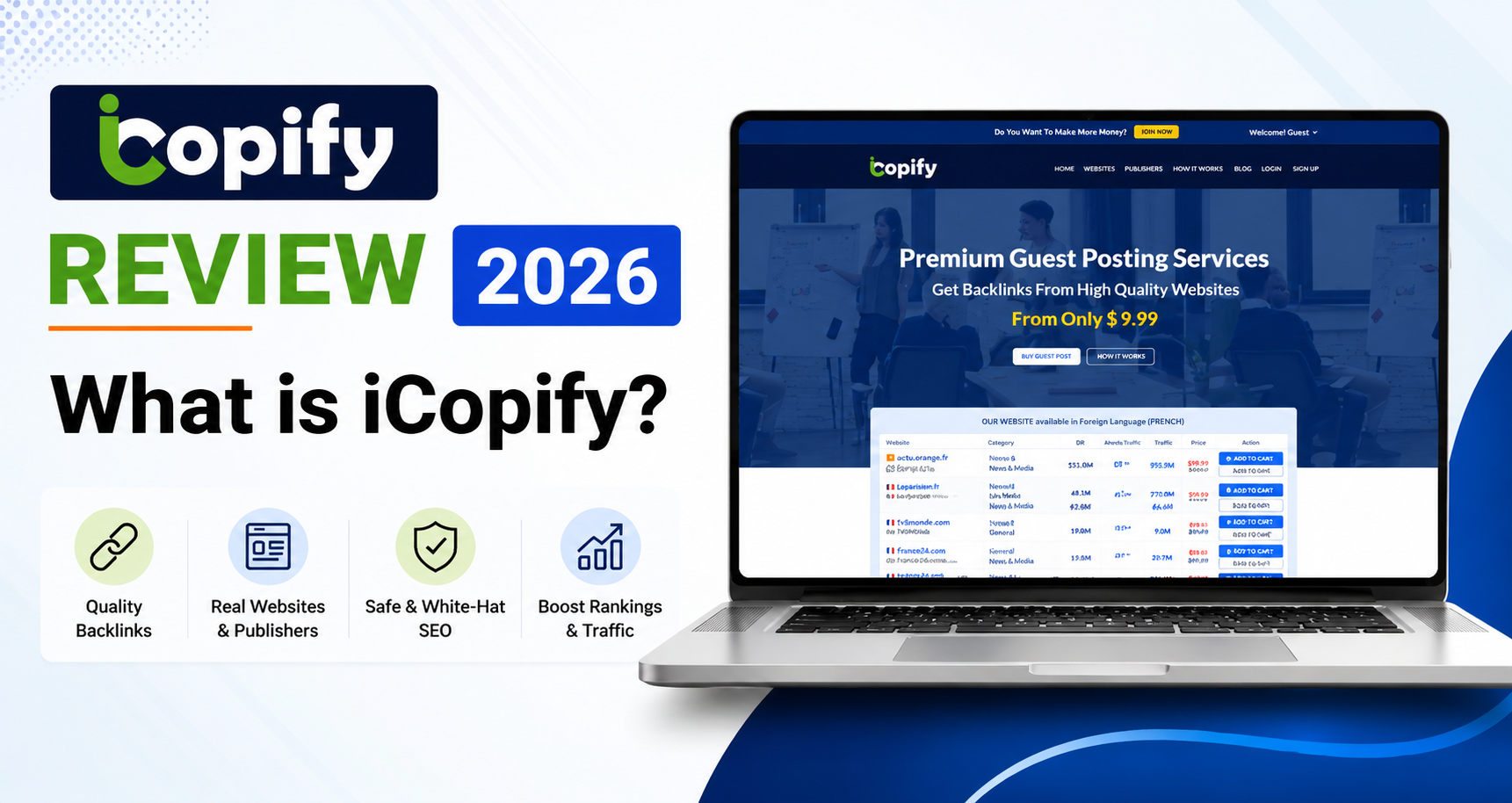
iCopify is a self-serve guest posting and backlink marketplace that launched in 2021. The pitch is simple. Instead of emailing dozens of blog owners and haggling one at a time, you browse a catalog of publisher sites, pick the ones that fit your niche and budget, and order a placement directly through the platform. Beyond guest posts, iCopify also sells content writing, web design, and broader SEO services, which positions it as an all-in-one shop rather than a pure link marketplace.
What gets people in the door is the price. iCopify is one of the cheaper marketplaces in the category, with entry placements starting low. That affordability is real, and it is the platform's biggest draw. Like any open marketplace, it also asks more of the buyer when it comes to vetting, which is the theme to keep in mind throughout this review.
Below we look at the interface, the publisher network, pricing, the extra services, support, and a practical checklist for buying well on a platform like this.
iCopify at a Glance: Key Facts
|
Detail |
Information |
|
Type |
Guest post and backlink marketplace |
|
Founded |
2021 |
|
Headquarters |
United Kingdom |
|
Publisher Network |
100,000+ sites |
|
Services |
Guest posts, content writing, web design, SEO |
|
Starting Price |
From a low entry point, varies by publisher |
|
Pricing Model |
Per placement, set by each publisher |
|
Payment Protection |
Escrow-style hold plus a money-back guarantee |
|
Minimum Deposit |
$25 pre-funded wallet |
|
Turnaround |
A few business days, varies by publisher |
|
Best For |
Beginners and budget-conscious buyers |
Platform Interface and User Experience
The interface is one of iCopify's stronger points, and it shows up repeatedly in user feedback. The dashboard is clean, the navigation is straightforward, and the ordering flow is built so that someone placing their first guest post can get through it without prior SEO experience. For beginners, that low learning curve is a real advantage over busier, more technical platforms.
When you log in as a buyer, you get a searchable directory of publisher sites. Each listing carries the basics you need to make a first pass: domain rating, traffic indication, niche, country, and the placement price. iCopify states that it syncs with third-party SEO APIs to display domain rating, indexation, and organic visibility data on its listings.
A word of context that applies to every open marketplace, not just this one. Native dashboard metrics are a starting point, not proof of quality. Domain authority scores can be inflated, and a high number does not always reflect real, relevant traffic. If you are unsure which signal to trust when they disagree, our breakdown of DR vs traffic when buying backlinks is a useful primer. The sensible habit on any self-serve platform is to treat the in-dashboard figures as a first filter, then confirm the sites that interest you in your own tools before buying. We include a concrete checklist for that further down.
Publisher Network: Scale, Quality, and the Buyer's Role
With 100,000+ publisher sites, iCopify has a sizeable catalog. It is broad enough to find niche-relevant opportunities across most common industries and a good spread of countries. For everyday link building, iCopify’s inventory is rarely the bottleneck.
The Good: Volume and Easy Discovery
The catalog is large enough with 100K+ sites, that finding sites in your niche is usually quick, and the combination of filters and a simple interface makes discovery painless. For a buyer who knows what good looks like, you can surface relevant, reasonably priced placements without much friction. The low prices also mean you can test a few smaller sites for the cost of a single placement elsewhere.
The Reality: Open Marketplaces Put Vetting on You
This is not a criticism unique to iCopify. It is how open, self-serve marketplaces work across the board. Because publishers list themselves and set their own terms, quality varies, and the responsibility to evaluate each site sits with the buyer rather than the platform. That is the trade-off you accept in exchange for low prices and full control. Experienced buyers handle it as routine. Newer buyers, who are exactly the audience low prices attract, are the ones most likely to skip vetting and regret it, and skipping it is behind many of the common link building mistakes that cost businesses rankings. The fix is – process, not luck, and we have laid that process out below.
iCopify Pricing and Payment
On the surface, iCopify is one of the more affordable marketplaces around. Entry placements start low, and prices climb from there based on a site's domain rating, traffic, topic, and reputation. Each publisher sets their own rate, so two similar-looking sites can be priced very differently. That is normal for a marketplace model rather than anything specific to this platform.
There are two protections on the payment side. Funds are held in an escrow-style system and released to the publisher once the placement goes live, and iCopify offers a money-back guarantee if you are not satisfied with the service. Both reduce the risk of paying for a placement that never appears.
One honest clarification on what escrow does and does not cover, and again this is true of paid placements generally. Escrow and go-live approval protect you up to the point the link is published. They are not a guarantee of long-term Google indexing or permanent link retention. A page can be published correctly and later be deindexed, set to noindex, or removed once any minimum retention window passes. This is a known characteristic of paid link building everywhere, not a claim specific to iCopify, and it is the reason ongoing monitoring matters (more on that below).
Because the same site is often sold across multiple marketplaces at different prices, the smartest habit before any purchase is to compare. Our guide on how much you should pay for a guest post breaks pricing down by authority tier, and running a domain through a backlink price comparison is the quickest way to confirm a listing is genuinely competitive rather than marked up.
All-in-One Services: Content, Design, and SEO
iCopify is not only a placement marketplace. It also offers content writing, web design, and managed SEO services, which lets you handle more of a campaign in one place.
The content writing option is the most relevant add-on for most buyers. If you would rather not write the article yourself, you can have it produced through the platform and placed in one workflow. As with most marketplace writing at the budget end, the output tends to be serviceable for standard SEO purposes but may not match native-fluency brand copy, so for messaging that matters, supplying your own article is the safer route. The design and SEO services widen the appeal for small businesses that want a single supplier, though buyers focused purely on links will rarely use them. If you are torn between a self-serve marketplace like this and a done-for-you provider, our comparison of a link building marketplace vs an agency lays out the trade-offs.
The Ordering Process
The workflow is deliberately short, which is a big part of why beginners like it:
- Create an account and load your wallet. Note that iCopify runs on a pre-funded wallet with a minimum deposit of $25, so you top up first and spend down from a balance rather than paying per order.
- Filter the catalog to shortlist relevant publisher sites.
- Place an order, specifying your URL, anchor text, and content or a content request.
- The publisher reviews and publishes your article.
- You confirm the live placement, and only then are funds released.
One practical quirk of the wallet model is worth planning around. Because orders rarely land on round numbers once individual publisher prices and fees are added, you can end up with small amounts of unspent balance left sitting in the account. It is not lost, but it is capital parked in the platform rather than your pocket, so it is smart to size deposits against the orders you actually intend to place rather than topping up in large chunks.
Because the order is escrow-backed, you are not paying blind, and the money-back guarantee sits underneath the process as a backstop. The main variable is turnaround, which depends on the individual publisher and typically runs a few business days rather than the instant delivery some listings imply.
A Practical Vetting Checklist Before You Buy
This is the part that separates buyers who get value from a marketplace from those who waste budget. Whatever a listing's native metrics say, run each shortlisted site through your own tools, such as Ahrefs or Semrush, and check four things:
- Organic traffic baseline. Be cautious with any site pulling very low real organic traffic, regardless of how high its DR or DA looks. A common sensible floor is around 1,000 monthly organic visitors, adjusted for how niche the site is. Authority without traffic is a warning sign.
- Traffic trendline. Look at the shape of the graph, not just the number. A stable or rising trend is healthy. A sudden, sharp drop can signal an algorithmic hit, which is a reason to pass.
- Geographic distribution. Confirm that the bulk of the site's traffic comes from your actual target market rather than unrelated regions. A geo mismatch undercuts the value of the placement.
- Keyword relevance. Check that the site ranks for genuine commercial or informational keywords related to your industry, not random or spammy terms. Relevance is what makes a link worth having.
- Publisher completion rate. This one is platform-specific. iCopify shows a completion or response indicator on publisher listings, and it matters more than people expect. Some sellers sign up and then go inactive, so an order placed with them can sit in limbo until it times out and the funds return to your wallet. Favour publishers with a strong completion track record and recent activity, and treat a low or missing completion rate as a reason to pass, however tempting the price.
If a site fails any of these, the low price is not a saving. Spending five minutes here is the highest-return habit in marketplace link building.
A Note on Link Retention and Monitoring
Across budget guest-post inventory in general, links do not always last. Some publishers remove or unpublish posts once a contractual minimum window passes, and pages can fall out of the index over time. Plan for it rather than assume permanence. Keep a simple record of every placement, check periodically that the page is still live and indexed, and factor a degree of attrition into how you value cheap links over a 6 to 12 month horizon. This is standard practice for any paid link program, not a flaw specific to one platform.
Customer Support
Support gets mixed marks, and it is worth being straight about that. For account setup, navigation, and billing questions, users generally describe the team as quick and responsive, and the company does engage with feedback on public review platforms rather than ignoring it. Where sentiment turns is on post-purchase problems. As of mid-2026, iCopify's Trustpilot score sits around 3.2 out of 5, an average rating, and a recurring theme in the more critical reviews is friction when something goes wrong after publication, such as a publisher submitting an off-brief article or a link being removed once the escrow window has closed.
The practical takeaway is not that support is bad, but that you should not lean on it as your safety net for link quality or retention. Keep your own records of every placement, monitor whether links stay live and indexed, and screen publishers up front using the completion-rate tip above, so you are catching problems yourself rather than relying on the platform to resolve them after the fact. Support is reachable through the platform.
iCopify Pros and Cons: The Honest Summary
What Works Well
- Low entry pricing, among the more affordable in the category, which makes testing sites cheap.
- A sizeable catalog of 100,000+ publisher sites across most common niches and many countries.
- Clean, beginner-friendly interface with a short, simple ordering flow.
- All-in-one offering that adds content writing, web design, and SEO services.
- Escrow-style payment protection plus a money-back guarantee at the point of delivery.
- Responsive support for setup and billing questions, with active engagement on public review platforms.
- Decent filtering by niche, country, authority, and price.
Where Buyers Need to Take Care
- Like all open marketplaces, vetting is on you. Native dashboard metrics are a first filter, not proof, so confirm sites in your own tools.
- Quality varies across a large, low-cost catalog, so a low price alone is not a signal of a good site.
- Escrow protects delivery, not long-term indexing or link retention, so plan for monitoring and some attrition.
- Budget-tier content writing may not meet a brand-fluency standard.
- Public information about the founders and team is limited, which some buyers like to see more of.
- A pre-funded wallet with a $25 minimum can leave small unspent balances parked in the platform.
- Support is responsive on billing and setup but draws criticism on post-publication disputes, reflected in an average Trustpilot score around 3.2 out of 5.
- As with any paid-link marketplace, careless use carries SEO risk; placements should be relevant and part of a diversified strategy.
Who Is iCopify Best Suited For?
Based on the full picture, iCopify is a good fit for:
- Beginners who want a simple, affordable way to start guest posting without a steep learning curve.
- Budget-conscious buyers and small businesses testing link building before scaling spend.
- Buyers who already know how to vet a site's real traffic and authority in their own tools.
- Anyone who wants content, design, and links from a single self-serve supplier.
It is a weaker fit for buyers who want deep, fully reliable publisher metrics inside the platform with no external checking, for those who prefer maximum company and pricing transparency, or for anyone chasing premium editorial placements at the very top of the market. Those buyers will likely prefer a richer-data marketplace or a curated managed service, accepting a higher price for it.
OVERALL iCOPIFY RATING
Interface & Ease of Use █████████░ 9/10
Publisher Network & Scale ████████░░ 8/10
All-in-One Services ████████░░ 8/10
Customer Support ██████░░░░ 6/10
Pricing & Value ███████░░░ 7/10
Data and Metrics (buyer-vetting required) █████░░░░░ 5/10
Publisher Curation (open marketplace model) █████░░░░░ 5/10
Company Transparency █████░░░░░ 5/10
Overall Score: 6.5 / 10 Recommended With Caveats
Final Verdict: Is iCopify Worth It?
iCopify earns its place by being cheap, simple, and beginner-friendly, backed by a good support reputation for everyday questions and useful payment protection at delivery. If you are starting out, working to a tight budget, or want to test a batch of placements without much spend, it is a reasonable entry point into guest posting.
The caveats are the ones that come with any open, self-serve marketplace rather than anything unique to this brand. The platform hands you control and low prices, and in return you take on the vetting. Native metrics are a starting point, escrow covers delivery rather than permanence, and a low price means nothing if the site behind it has no real traffic. Use it with a clear process: vet every site in your own tools using the checklist above, compare the price before you buy, and monitor your placements afterward. Do that, and iCopify can be a genuinely useful budget option. Skip it, and the savings tend to evaporate.
If you are weighing your options, our roundup of the top 19 link building marketplaces shows how iCopify compares to the alternatives. For more platform reviews and link-building guides, visit WebLinkBuzz.